Anyone who knows me—or talks to me for more than five minutes about my work—will hear about sandtray therapy.
In fact, one of my therapist friends jokingly calls it my “Sandtray Monologue.”
And honestly? She’s not wrong.
I love this method of work. I’ve seen its power again and again with children, adolescents, and adults across a wide range of presenting issues.
Yet despite its effectiveness, sandtray therapy is still surrounded by a surprising number of myths that often keep therapists from learning it—or using it confidently.
So let’s clear the air. Below are five of the most common myths about sandtray therapy, and why they simply aren’t true.
Myth #1: “Sandtray isn’t real therapy—it’s just playing with toys in sand.”
This is absolutely false.
Sandtray therapy is brain-informed, research-based, and deeply therapeutic. Much of sandtray work is rooted in non-directive play therapy, which has repeatedly been shown to be evidence-based.
Child-Centered Play Therapy research clearly outlines its effectiveness, and Bonnie Badenoch’s Being a Brain-Wise Therapist even devotes an entire chapter to the power of sandtray work through the lens of interpersonal neurobiology.
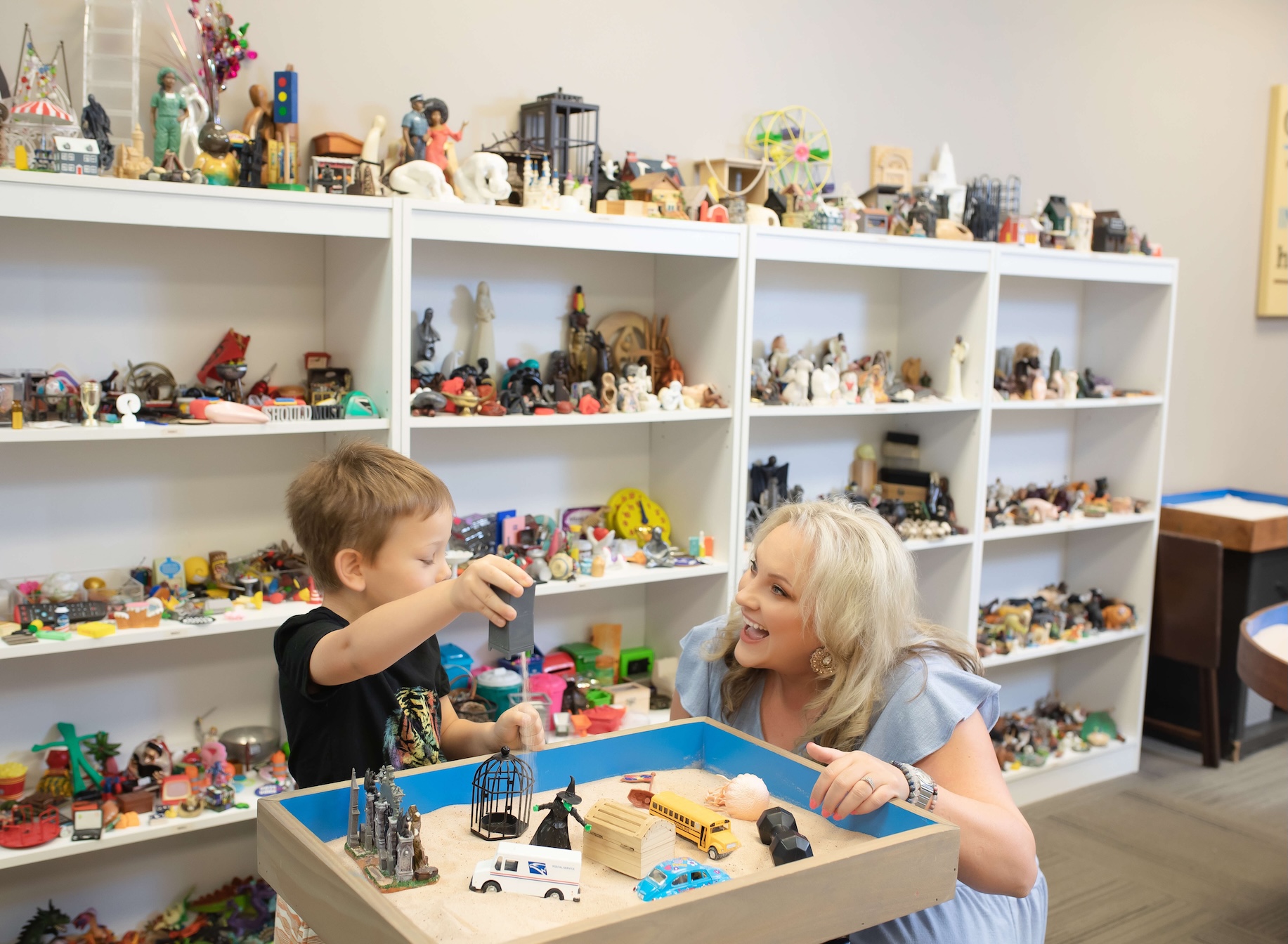
From a brain perspective, sandtray therapy is incredibly rich. It engages all five senses, which promotes neural integration and the formation of new neural pathways. Increased neural integration supports higher-level skills such as empathy, insight, and emotional regulation.
Sandtray naturally connects the left and right hemispheres of the brain, allowing clients to process experiences that may be difficult to access verbally. It often works through the “back door” of the brain, bypassing defenses that can shut down traditional talk therapy.
What may look like “play” on the surface is actually deep neurological and emotional work happening beneath it.
Myth #2: “Sandtray therapy is only for kids.”
Also false.
While sandtray therapy was originally developed by Margaret Lowenfeld for children, it has evolved far beyond that. Some of the most powerful sandtray work I’ve witnessed—and facilitated—has been with adults.
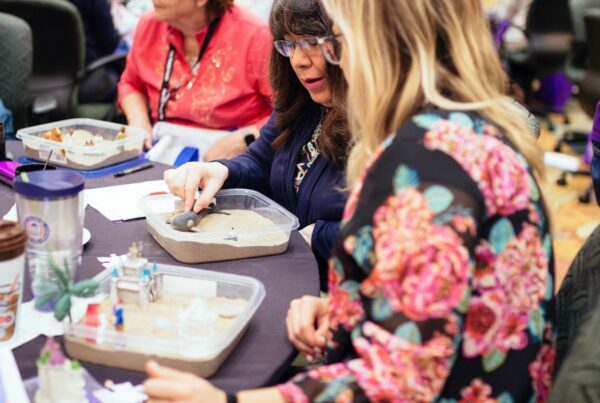
In trainings, I’m always careful to choose directives that aren’t intentionally intense. And yet, time and time again, adult therapists are surprised by how much emerges.
In one training, a volunteer confidently stated there wasn’t much personal meaning in her tray. Within 5–10 minutes of gentle, surface-level processing, she was in tears—completely caught off guard by what surfaced.
And this was a training with a high-functioning therapist. Imagine what unfolds in the sand with actual clients.
Adults often hesitate at first—“You want me to play in the sand?”—which is understandable. I normalize that reaction and invite curiosity.
Most adults end up loving sandtray therapy after the first session. When someone doesn’t, it often signals strong defenses, which is important clinical information in itself.
Children have the luxury of play being “just play.” Adults don’t always feel that safety automatically, so it’s our job to provide a free and protected space where whatever emerges can be held safely and without judgment.
Myth #3: “Sandtray therapy is too expensive to use.”
False again.
Yes, sandtray therapy has several components—but it does not have to break your budget.
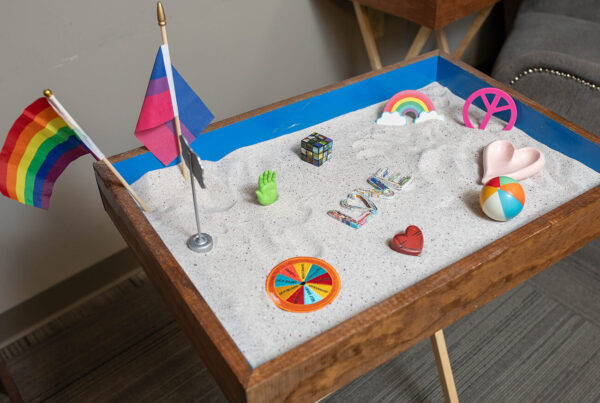
A tray can be as simple as a clear plastic storage bin painted blue on the inside with marine paint. Play sand from children’s stores is safe, non-toxic, and far less expensive than specialty sands. Miniatures don’t require pricey starter kits either.
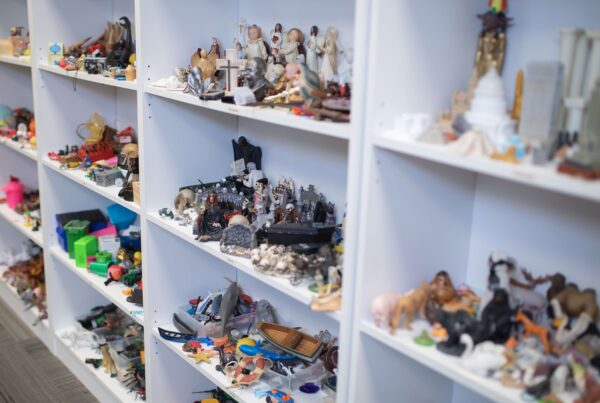
Dollar stores, thrift shops, garage sales, flea markets, and even your own home are full of usable items.
Two ducks sitting side by side might look random, but to a client, they may represent a marriage.
The most important thing to remember is this: the brain will use whatever is available to express what it needs to express. You do not need a massive collection to do effective work.
Myth #4: “Sandtray therapy isn’t mobile.”
This is a common concern, especially for therapists working in schools, homes, or shared spaces. Not everyone has the luxury of a permanent office with shelves of miniatures.
The good news is that sandtray therapy is highly adaptable.
Miniatures can be stored in tackle boxes or rolling containers from sporting goods stores. Labels can help with loose organization, but perfection is not required. The goal is accessibility, not aesthetics.
As for the tray itself, sandtray therapy (as opposed to traditional sandplay) is flexible. A smaller blue plastic box with a lid and sand inside can easily fit in a trunk and be just as effective as a full setup.
I’ve done deeply impactful sandtray work with a mobile setup. What matters most isn’t the equipment—it’s how you show up with your client.
Myth #5: “I have to know the meaning of everything in the tray or I’m not doing my job.”
This myth stops many therapists before they ever begin, and it couldn’t be more false.
We are not meant to be mind readers or symbol interpreters. When we believe we have to “know everything,” we set ourselves up for anxiety and disconnection.
Brain research tells us that if we provide a safe and protected space, the brain will do the work it needs to do. Our role is to witness, reflect, and hold that space—not to decode every miniature.
During a sandtray workshop at my practice, participants watched a video of me doing sandtray therapy and asked what I would change.
My answer surprised them: I would talk less.
Sandtray therapy invites us to quiet our left brain, stay present, and focus on the emotional experience. Clients remember how we made them feel far more than what we said.
As Maya Angelou so beautifully put it, “People will never forget how you made them feel.”
Sandtray therapy is not just play. It’s not only for kids. It’s not too expensive, not immobile, and not about interpretation.
It is a powerful, brain-based, deeply human way of connecting with clients across ages and settings. If any of these myths have held you back—from learning sandtray, using it, or confidently explaining it to others—you’re not alone. But hopefully, they don’t get to hold that power anymore.
Sandtray therapy is a privilege to witness, a gift to facilitate, and a reminder that sometimes the deepest healing happens beyond words.