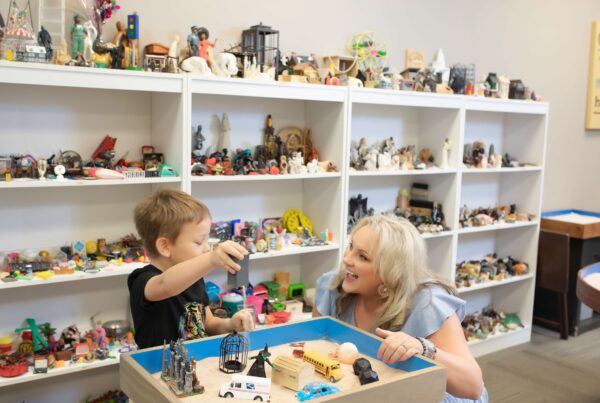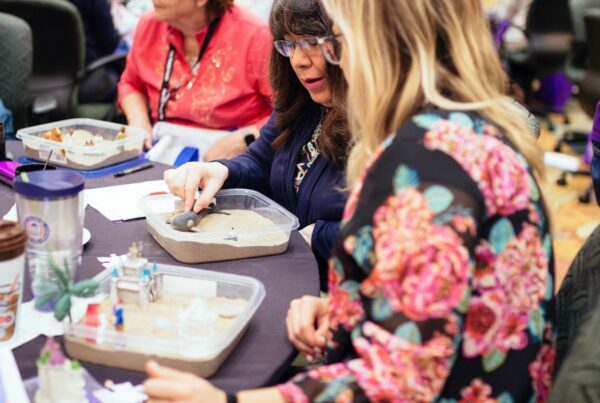
This past weekend, several of my play therapy friends and I gathered for what we jokingly call a playdate—a chance to catch up, reconnect, and talk shop, especially about sandtray therapy.
It was refreshing to share challenges, success stories, and creative ideas with others who truly get this work. Being with like-minded professionals is one of my favorite forms of self-care.
Over the weekend, we wandered through corporate chains and chic boutiques throughout the greater St. Louis area.
Along the way, I picked up several new miniatures for my ever-growing collection. At one point, one of my friends commented that I had a real gift for finding great sandtray pieces.
My response was typically flippant: “Well, everyone has to have a gift for something.”
But the comment stuck with me. It got me thinking about what actually makes a good sandtray miniature.
I once heard a Jungian therapist say that a sandtray collection should represent everything in the world.
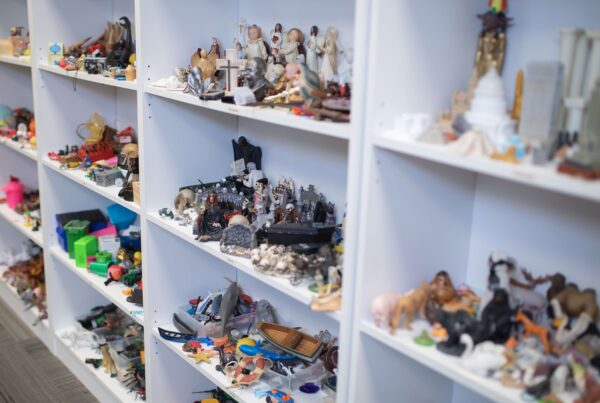
While that’s a lovely idea, most of us don’t have room—or budget—for everything. Instead, we need to be intentional, creative, and strategic in how we build collections that allow clients to express their inner worlds within real-life constraints.
Below are six guiding principles I use when curating miniatures—along with examples of how to get the most meaning (and mileage) out of your sandtray materials.
1. Groups
Humans are social beings by nature. From chimpanzees to the most introverted IT professional, we all crave connection. We also tell our stories in relation to others.
Providing miniatures that naturally group together allows clients to express relational dynamics. Don’t worry if your grouping is a herd of pigs or a cluster of robots. If the brain needs to represent a group, it will use whatever is available.
The meaning comes from the client—not the object.
2. Challenges
Most people come to therapy because they are facing a challenge—whether relational, internal, or situational. Choose miniatures that can represent obstacles, tension, or movement.
Rocks can become walls, boundaries, or bridges. Puzzle pieces can symbolize confusion, missing parts, or problem-solving. Even a small puzzle from a dollar bin can become a powerful metaphor.
When you think of therapy as helping clients assemble their own puzzle, suddenly many everyday objects become useful.
3. Nature
Biophilia—the innate human connection to nature—is deeply rooted in us all. Nearly every client, child or adult, places some form of nature in the sandtray.
Look beyond traditional trees and animals. Green pebbles, shells, sticks, or stones can all represent nature. Don’t forget dead parts of nature as well. Twigs collected in fall or winter and dried out often carry powerful symbolism.
Many clients are especially drawn to items from actual nature rather than manufactured pieces.
4. Heroes, Villains, and Mystical Creatures
Just as we tell our stories in terms of “us” and “them,” we often frame experiences through good and evil, strength and threat, protection and danger.
Evil witches can be found in fast-food toys. Angels appear in dollar stores after Christmas. Mystical creatures are popular with both children and adults.
One of my most-used miniatures with adults is an Alf figurine riding a magic carpet—found in a flea market grab bag. What seems silly at first glance often holds deep symbolic meaning.
5. Broad Life Themes
While religious miniatures have their place, I often find that broader symbolic themes get used more frequently. A simple rock with the word hope on it can speak volumes.
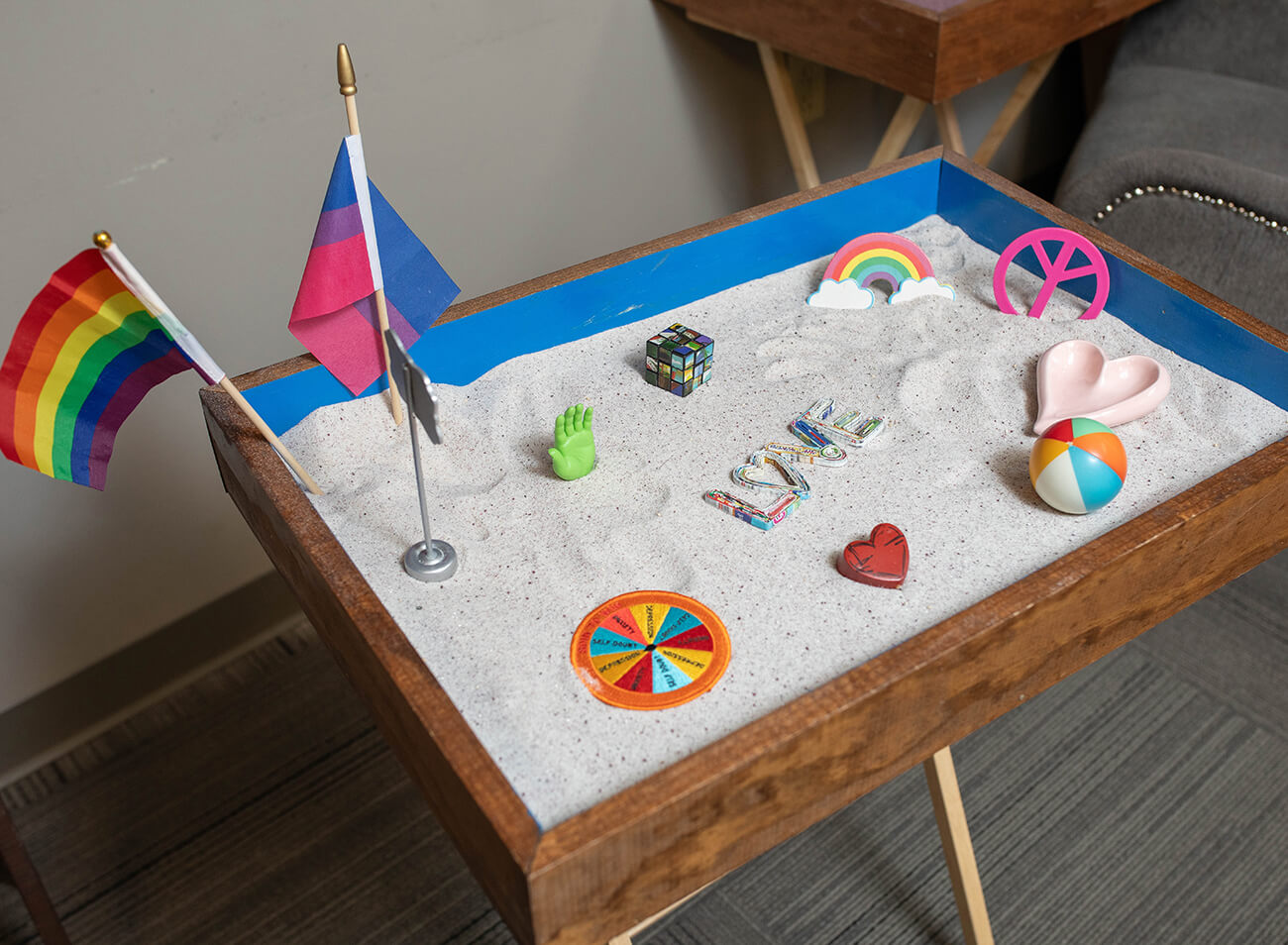
Hearts, crosses, rainbows, baby bonnets, four-leaf clovers, devil horns, and similar items allow the brain to project meaning without being overly literal. Party sections at dollar stores are surprisingly rich sources for these themes.
Remember: the brain looks for representation, not perfection.
6. Holidays and Milestones
Celebrations mark important moments in our lives and often carry strong emotional weight. Birthday candles can represent growth, aging, or unmet expectations. Christmas trees, wedding cake toppers, or graduation items can trigger memories and meaning far beyond the holiday itself.
Around holidays, keep an eye out for discounted items. I make it a point to shop the 80%-off bins after major holidays.
Final Thoughts
One of the keys to becoming a true sandtray whisperer is learning not to be too literal.
Our minds think in images, associations, and layers of meaning. Dismissing a Yoda miniature because you “don’t work with kids” misses the point. For an adult, Yoda may represent wisdom, mentorship, or a time in life when things felt magical and safe.
Always stay curious. Always stay open.
If an object sparks something in you, there’s a good chance it will do the same for a client. Keep your eyes open, your mind flexible, and your collection grounded in symbolism rather than rules.
That’s where the real magic of sandtray lives.