
“Goodness and karma bat last.” — Anne Lamott
I’ll be honest: I’m writing this to process—and hopefully to connect with others who wrestle with the question of why bad things happen to good people.
This theme shows up everywhere: in my personal life, among family and friends, in my work as a therapist, and in the world at large. We see it in government failures, natural disasters, and the ongoing problem of injustice and suffering.
In therapy, clients struggle with this question constantly. And many times, I don’t have an answer.
I want to comfort them. I want to say everything will work out in the end. But the truth is—I don’t know if it will. Why do good people suffer while others seem to move through life untouched? Why does doing the “right thing” not always lead to good outcomes?
We’re often told that life keeps presenting the same lessons until we learn what we’re supposed to learn. I try to find comfort in that idea, but it’s incredibly hard when you’re in the middle of despair, anxiety, or depression. It’s hard when someone loses a child. It’s hard when a job disappears and food on the table becomes uncertain.
Being told that suffering is happening “for your own good” can feel invalidating—and often leads to guilt and self-blame rather than healing.
So where does that leave us? As therapists—and as people—do we just teach reframing? Do we tell ourselves and our clients to look on the bright side and push through?
I know this much: when things have been at their bleakest in my own life, being told to “focus on the positives” didn’t help. It usually made things worse. If I couldn’t do what I should—if I couldn’t summon optimism—shame crept in.
So what do we do when we sit with the hardest parts of life for others, and then face them in our own lives too?
I don’t have a crystal ball. I don’t know that everything will turn out for the best. Some things are deeply unfair. Some things just hurt—and keep hurting.
What I can offer are a few practices that have helped me and my clients stay human in the middle of life’s hardest moments.
Here are four things to do when life genuinely sucks.
1. Be kind to yourself
This sounds simple, but it’s often the hardest thing to do.
When life falls apart, it’s difficult to be kind to anyone—especially yourself. I try to imagine what I would say to a small child who was hurting. It’s never anything close to the way I speak to myself in moments of distress.
In fact, if someone talked to a child the way many of us talk to ourselves, we’d be deeply concerned.
In times of crisis, ease up on yourself. Survival is enough.
“If someone in your life talked to you the way you talk to yourself, you would have left them long ago.” — Carla Gordon
2. Stay connected to something spiritual
Even if your relationship with God—or the universe, or whatever you believe in—feels strained, don’t completely shut the door.
Stonewalling ends relationships quickly. Sometimes it helps to act as if there is still connection, even when you don’t feel it. As the old saying goes, “fake it till you make it.”
Ritual matters in times of crisis. Prayer, meditation, lighting a candle, sitting in silence—do the ritual even when you don’t feel like it. Your body often needs it before your heart believes it again.
“Action is the antidote to despair.” — Joan Baez
3. Find moments of flow
Think back to what brought you joy as a child—something that absorbed you so fully you lost track of time. Do that.
For me, it’s getting lost in a good book or laughing until I can’t breathe. Flow happens when we’re fully engaged in something meaningful or pleasurable, even briefly.
When everything feels heavy, it can seem like nothing will ever change. Flow doesn’t fix everything—but it helps time pass more gently until breathing feels possible again.
“Follow your bliss and the universe will open doors where there were only walls.” — Joseph Campbell
4. Have someone who will sit with you
Sometimes words simply aren’t enough. Pain can be too big, too raw, too primal for language.
What helps most is having at least one person who can sit with you without trying to fix anything. Someone who can be present in the discomfort without rushing it away.
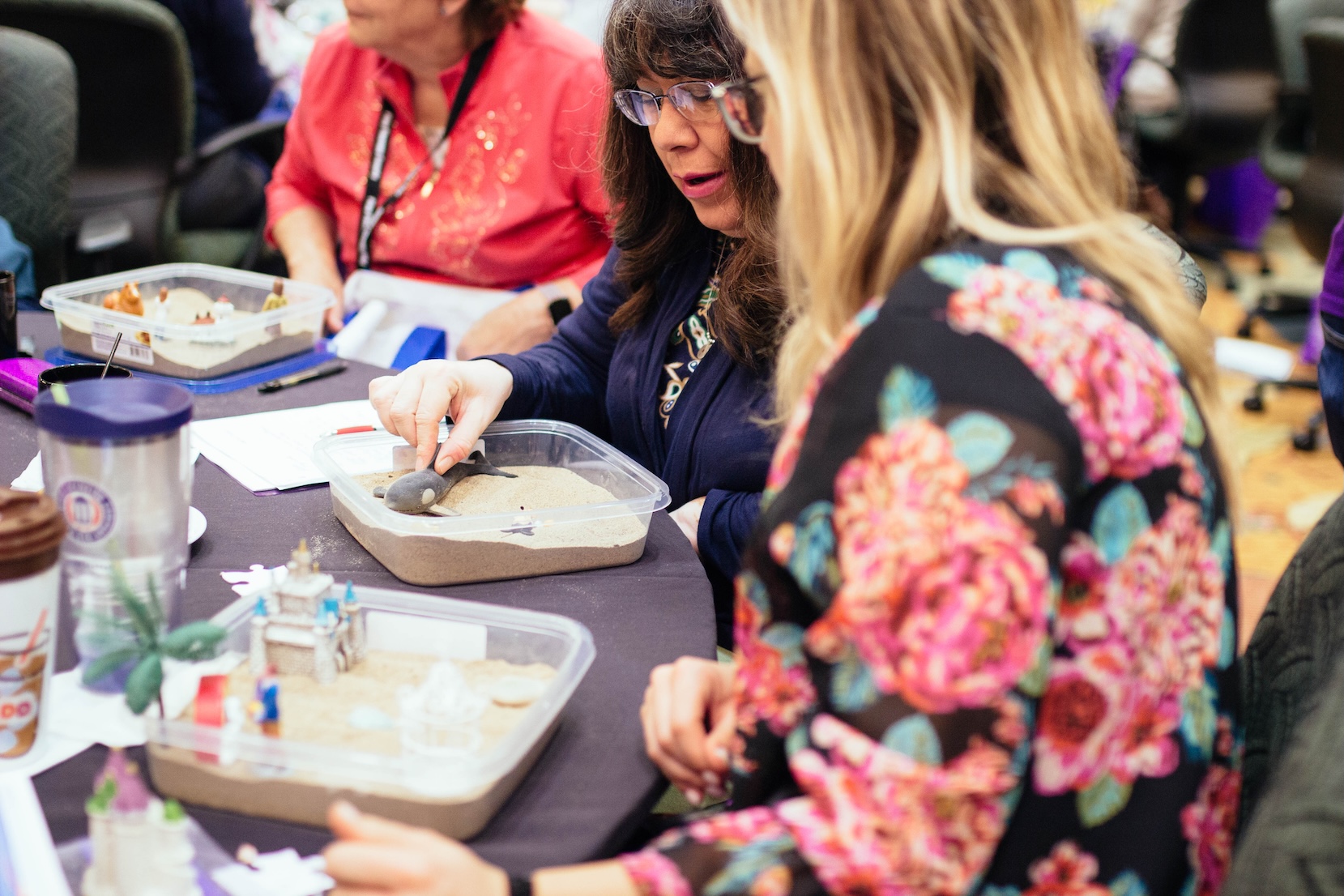
In therapy, experiential approaches—like sandtray or Gestalt work—often help clients move through pain that words can’t reach. As Carl Jung said, “Often the hands solve a riddle the intellect has wrestled with in vain.”
Walking through a dark forest is frightening—but it’s less terrifying when someone is there to hold your hand.
There isn’t a moral to the story right now. Maybe there will be one someday.
Getting through grief, despair, or loneliness is hard work. Be gentle with yourself. Stay connected where you can. Find small moments of joy or flow. And most importantly, make sure you have at least one person who can sit with you—holding space for your heart until you can breathe again.
I’ve shared some of my story here. I’d love to hear yours.
What helps you when life feels unbearable? What gives you strength in dark seasons—and how do you help others through theirs?