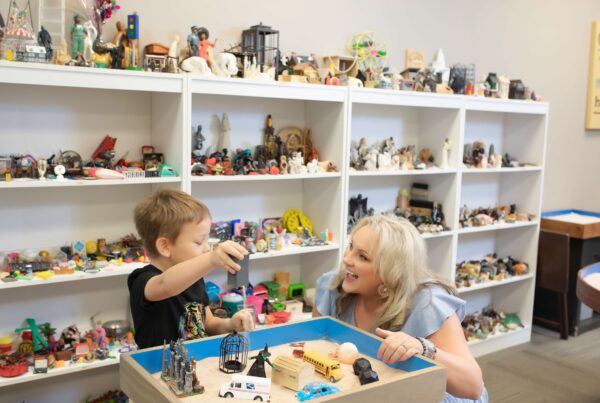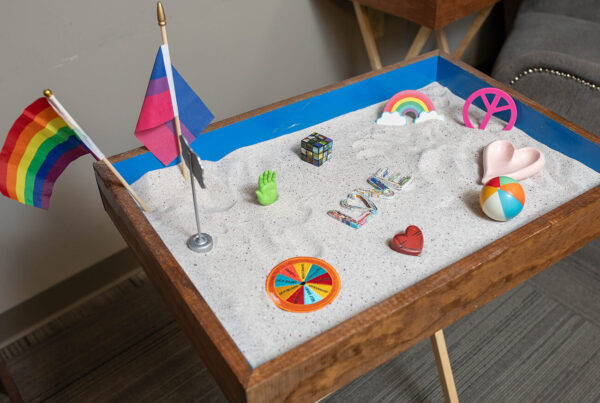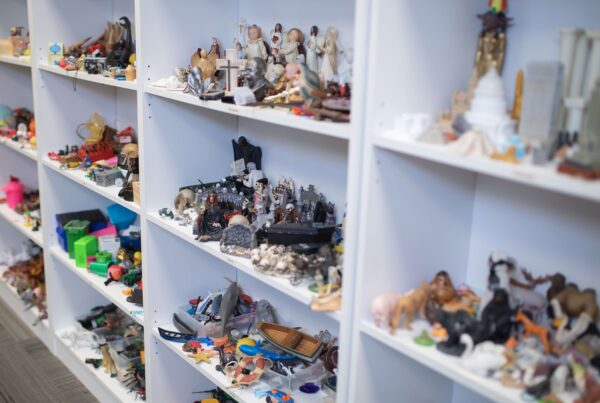
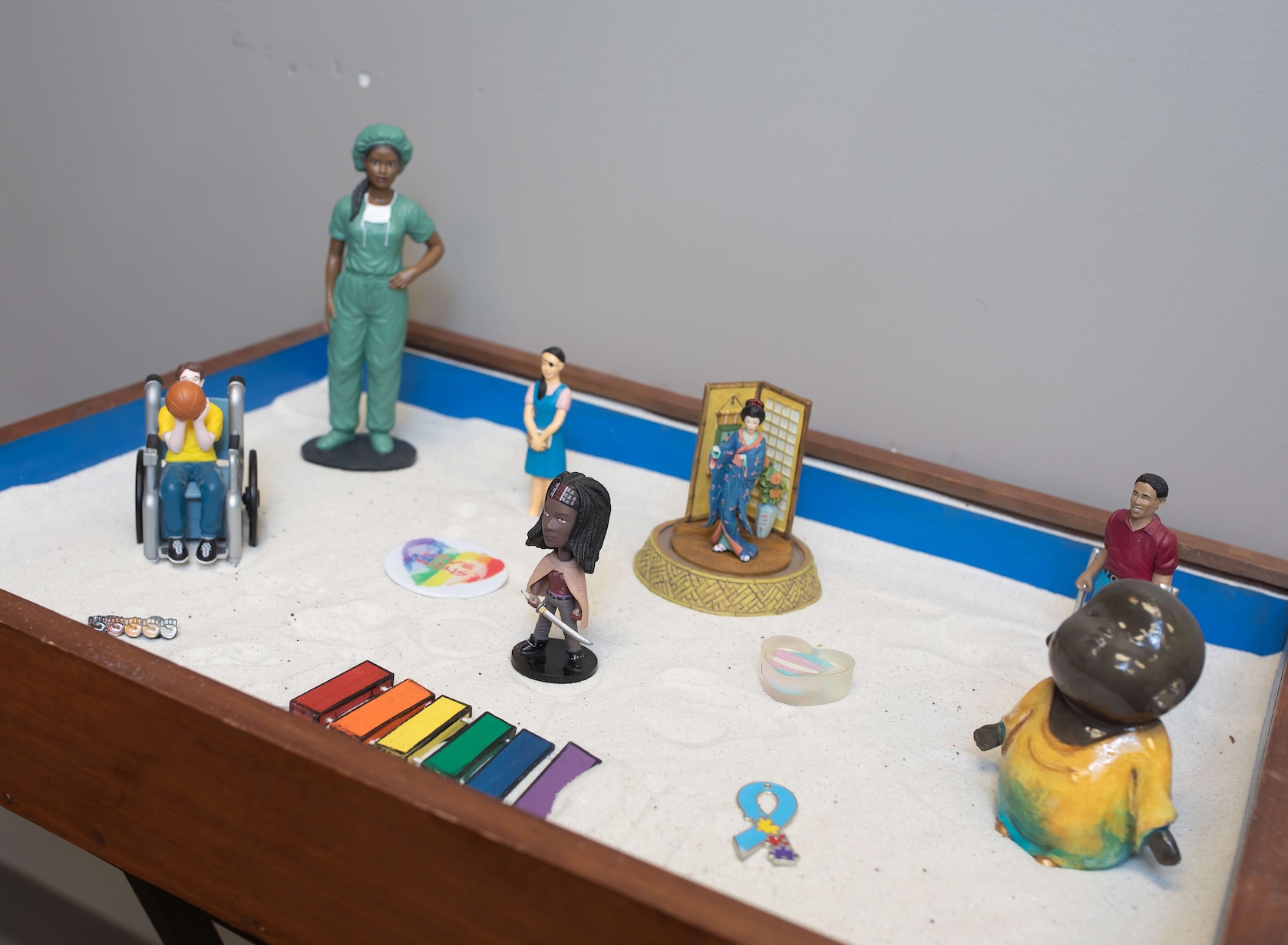
Miniatures are everywhere.
You find great ones at yard sales, in the dollar bin at Target, and often in your own kids’ toy boxes. And yet, somewhere along the way—probably in a training, supervision group, or whispered rulebook—you were told that character-themed miniatures are a big no-no in sandtray work.
So even though part of you sees the value, you hesitate. You pass over Elsa. You ignore Darth Vader. You quietly put the Muppets back on the shelf.
And still, a small voice says, “But this would be so good.”
I’m here to tell you: you can stop resisting.
I actively use character-themed miniatures—Frozen, Star Wars, Muppets, and beyond—with both children and adults, and the results are powerful.
Let’s talk about why.
The Common Argument Against Character Miniatures
The usual concern sounds like this:
“If you use character-themed miniatures, kids will just retell the movie or show instead of doing real therapeutic work.”
In all my years of doing sandtray therapy, I have never—not once—seen this happen.
What I have seen is something far more clinically meaningful.
Many popular characters function as modern archetypes. Darth Vader, for example, often represents authority, fear, or an internalized critic—sometimes far more clearly than a generic figurine ever could.
This makes sense when you consider that many of these characters are intentionally built from archetypal psychology. George Lucas famously drew inspiration from Joseph Campbell, who in turn was deeply influenced by Carl Jung. These characters resonate because they tap into something universal.
That resonance is exactly what makes them useful in the sandtray.
Why I Choose to Use Them
My guiding principle in sandtray therapy is simple:
I use what exists in the world to help clients express their inner world.
If a character is wildly popular, it’s usually because it touches something deep in the psyche across cultures and ages. To exclude those images isn’t neutral—it’s limiting.
The idea that children will “just retell the movie” doesn’t hold up in practice. What actually happens is this:
A client might place Elsa in the tray and say,
“That’s me. I’m like Elsa because I shut people out.”
They don’t reenact Frozen.
They use Elsa symbolically—just as they would a horse, a shark, or a tree.
Even more telling? I’ve had plenty of clients take generic miniatures—a queen, a king, a villain—and name them Elsa, Maleficent, or another character anyway. If the archetype matters to the client, they will find a way to bring it into the story whether you provide the exact miniature or not.
A Word on Rules and Rigidity
Here’s my bigger point: be cautious of rigid “never” rules.
Sandtray therapy is not effective because you follow a perfectly curated rulebook or own the “correct” miniatures. The brain doesn’t require perfection to integrate—it requires access, safety, and symbol.
The power of sandtray therapy is far bigger than the small rules we sometimes impose on ourselves out of fear or tradition.
The most important element of sandtray therapy isn’t something you can buy or organize on a shelf. It’s the process of witnessing, of being fully present, and of truly listening with your whole self as a client tells their story.
So yes—buy Elsa.
Buy Darth Vader.
Buy the weird, the familiar, the nostalgic, and the symbolic.
Your clients’ brains will do the rest.