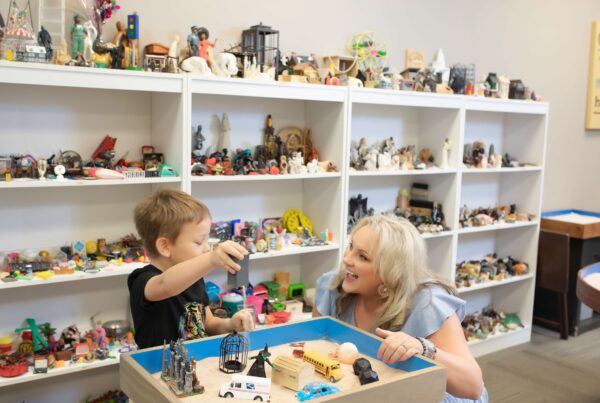

If you’ve been doing sandtray therapy for any amount of time, fences will show up.
You already know they matter—but figuring out what they mean can feel less obvious.
One foundational thing to remember, regardless of the client’s age:
Fences always represent separation.
They exist to keep something in, something out, or both.
Before we go further, a practical note: if sandtray therapy is part of your clinical toolbox, you truly cannot have too many fences. Aim for variety—rock walls, traditional fences, wire fences, and even “pretty” fences.
Some of the best fences I’ve found come from the fairy garden sections at craft stores like Hobby Lobby. A quick online search for fairy garden miniatures will also turn up surprisingly useful options.
Across ages, fences commonly reflect anxiety, guardedness, and a lack of felt safety. Clients often place them subconsciously—not because they’re thinking, “I need protection,” but because the brain is intuitively organizing safety before vulnerability.
As a therapist, your job is to notice. Every fence matters.
Below are five questions to guide your observation and processing.
1. When are the fences placed?
Timing matters.
If fences are placed first, this often indicates high levels of anxiety or guardedness. The tray is being secured before anything else is allowed in.
If fences appear later in the process, it generally suggests the client feels more regulated and less overwhelmed.
2. Where are the fences placed?
Placement tells you what feels vulnerable.
Fences lining the outer edges of the tray often signal a need for protection from the outside world.
If fences enclose only a portion of the tray, pay close attention to what’s inside. Children frequently place animals behind fences or inside cages. A helpful question—spoken or simply noted—is whether the fence is protecting what’s inside, or protecting others from what’s inside.
Those two meanings point to very different clinical themes. For example, a child with OCD may use fences to contain intrusive thoughts rather than to keep danger out.
3. How close together are the fences?
Spacing matters just as much as placement.
Tightly packed fences usually indicate higher levels of guardedness. As therapy progresses, you may notice the spaces between fences gradually widen.
That widening is meaningful. It often signals increasing safety, trust, and emotional flexibility.
With children especially, notice if fences disappear naturally during storytelling. Kids often work fluidly, and when fences come out without prompting, it’s a strong indicator of progress. Make a mental note—this observation is incredibly helpful for charting later.
4. What kind of fences are being used?
A fence is never “just a fence.”
Pretty fences, flowered fences, or decorative walls still serve the same function as harsh or rigid ones. Choosing something visually pleasant may suggest a need for separation while maintaining the appearance of calm or control.
Every stylistic choice carries meaning. Don’t dismiss it.
5. What happens when the fences are removed?
This is one of the most powerful moments in sandtray work.
Children often remove fences organically as their story unfolds. Adults may do the same when you ask a closing question like,
“Looking at your tray, does anything need to be changed, added, or taken away?”
When clients move fences farther apart or remove them entirely, take note. This often reflects internal shifts toward safety and integration.
When this happens, I’ll either document it or gently reflect it in session:
“That looks like it feels different. Tell me what it was like when the fences moved.”
These moments are worth slowing down for.
Fence movement—no matter how small—is progress.
Whether fences shift, loosen, or disappear entirely, they reflect real internal work happening beneath the surface. Your role is to notice, reflect, and celebrate these changes with your client.They may not realize how hard they’re working.
You get to help them see it.