So you’ve researched and scoured the internet trying to find the exact sandtray size you’re “supposed” to use… and now you’re more confused than when you started. (I hate when that happens—kind of like when a hangnail turns into finger cancer after five minutes on WebMD.)
Good news. I’m here to save the day.
This post breaks down the what, why, and how of sandtray specs—what actually matters, what doesn’t, and where you have flexibility.
Let’s get into it.
What size should my tray be?
Short answer: whatever works for you.
Longer answer: some sizes work better than others.
I’m speaking from a sandtray therapy perspective (not sandplay), which allows for much more flexibility in tray size.
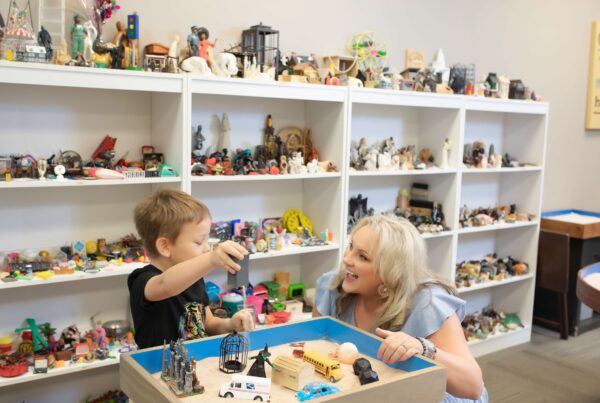
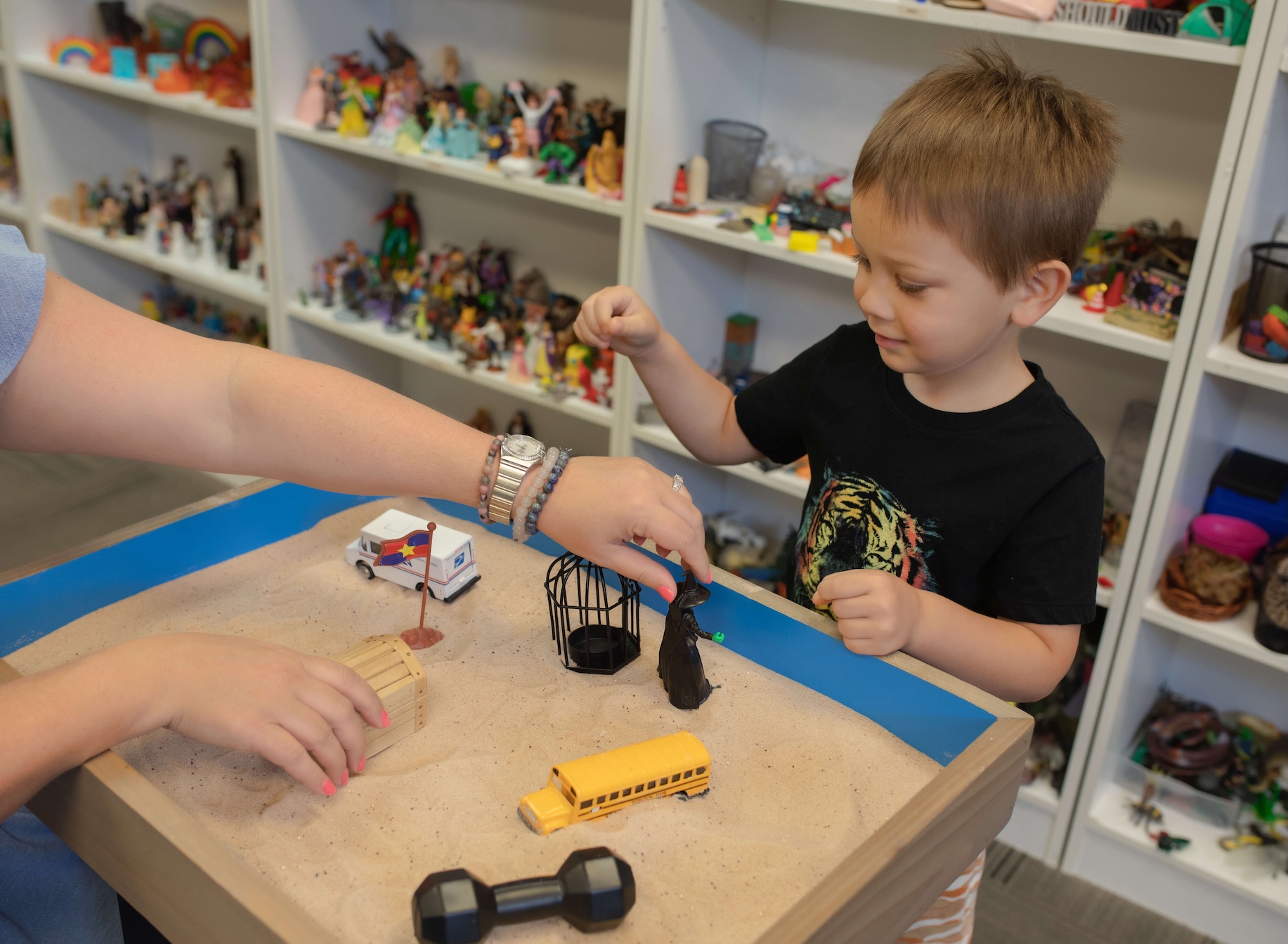
My go-to trays are about 3.5 inches deep and 20 inches wide. This depth works well for most types of sand and helps keep mess to a minimum. I’ve tried shallower trays around 2.5 inches deep, and they simply didn’t work well—sand ended up everywhere and frustration followed quickly.
A helpful rule of thumb: the messier the sand, the deeper the tray should be. Kinetic sand, for example, gets everywhere. While it drives me a little crazy, I would never remove it from my sandtray room—especially when working with children. Kids love it. Adults, on the other hand, usually won’t touch it.
Does my tray have to be wooden?
No.
The effectiveness of sandtray therapy does not depend on having perfect or specific materials.
I personally prefer wooden trays because they’re durable, visually appealing, and feel grounded. They also tie back to Jungian symbolism and the four elements, with wood representing earth—but this is a bonus, not a requirement.
I used plastic trays for years and had just as powerful sessions with them as I do now with wooden ones.
Use what you have.
Does the inside of the tray have to be blue?
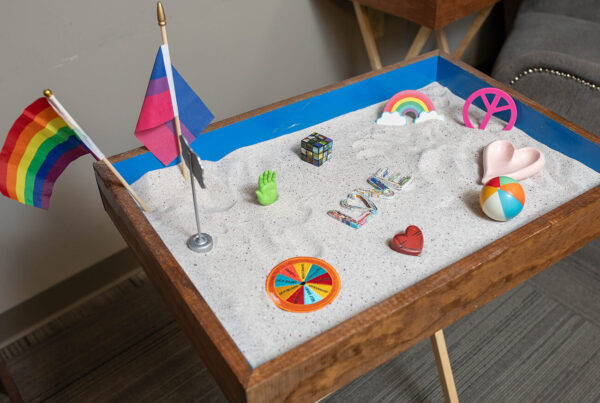
I rarely say “yes” to rules like this, but blue is strongly recommended.
Clients—especially children—often want to create water such as lakes, rivers, or oceans. Since I don’t allow actual water in my trays (because wet sand gets gross and takes forever to dry), the blue bottom becomes the water.
There’s also a Jungian influence here, where blue represents air and water elements.
Is blue mandatory? No.
Is it helpful? Absolutely.
How do I use sandtray when traveling to homes or schools?
There’s no single right way—but there is an easier way.
The hard way is carrying a tray full of sand plus a separate bag full of miniatures. It works, but it’s exhausting.
Over time, I worked with a local woodworker and my husband to create an all-in-one travel sandtray system. The tray secures on top, the lid fits snugly so sand doesn’t spill, and miniatures and supplies store underneath. The entire system rolls easily and lifts into the car as one unit.
It’s a true one-stop sandtray setup.
How can I easily see all sides of the tray?
Use a Lazy Susan underneath your sandtray.
This allows you to rotate the tray smoothly and observe details from every angle—details you might miss otherwise. I’ve used one for years and have never worried about the tray slipping or falling.
Simple and incredibly effective.
What about round trays?
If you like them, use them.
I originally had a round tray built for group work, but it’s now used constantly by my youngest clients. Young children are more right-brain dominant, and the right brain prefers curves and non-linear shapes.
Adults, especially in Western culture, tend to prefer straight lines and structure, so round trays are less commonly used with them.
If you primarily work with children, a round tray is worth the investment. If you mainly work with adults, it’s optional.
Is it “sand tray” or “sandtray”?
Both—depending on how you’re using it.
When referring to the object, use “sand tray” (two words). When referring to the method, use “sandtray therapy” (one word).
Just like sandplay therapists use “sandplay therapy,” sandtray therapists use “sandtray therapy.”
Now you know.
Also, we have all the helpful pictures down below. Happy tray building!